Building an Audio-Visual Installation That Changed the Game
When people talk about audio-visual installation as an art form, people tend to reach for the language of spectacle: scale, saturation, the sensory piled on until it overwhelms. But in 2015, at the Museum of Modern Art in New York, we set out to do something different. With Black Lake, we wanted to create an immersive, emotional terrain — something architectural, intimate, and tectonic.
It was never meant to read as another Björk video. It was closer to a landscape — grief and change, mapped in sound and image — that you walked into rather than watched.
I produced the Black Lake installation with Björk’s longtime manager Derek Birkett. Björk and Andy Thomas Huang had been imagining a piece that could stand outside the bounds of the conventional music video – something closer to ritual space than gallery viewing. MoMA came on board, but the budget to do it justice simply didn’t exist. So we built it ourselves.

Securing the Future of the Project
I led the financing and partnership strategy. Autodesk backed us with $350,000 in funding and technical support, unlocking the digital modeling and parametric design tools that allowed architect David Benjamin and his team at The Living to recreate an Icelandic lava cave inside a Manhattan museum. Then came a $600,000 commitment from Volkswagen’s Electronics Research Lab (ERL) in Stuttgart. They understood that this was more than an exhibition, it was a prototype for where music, software, and spatial storytelling were heading.
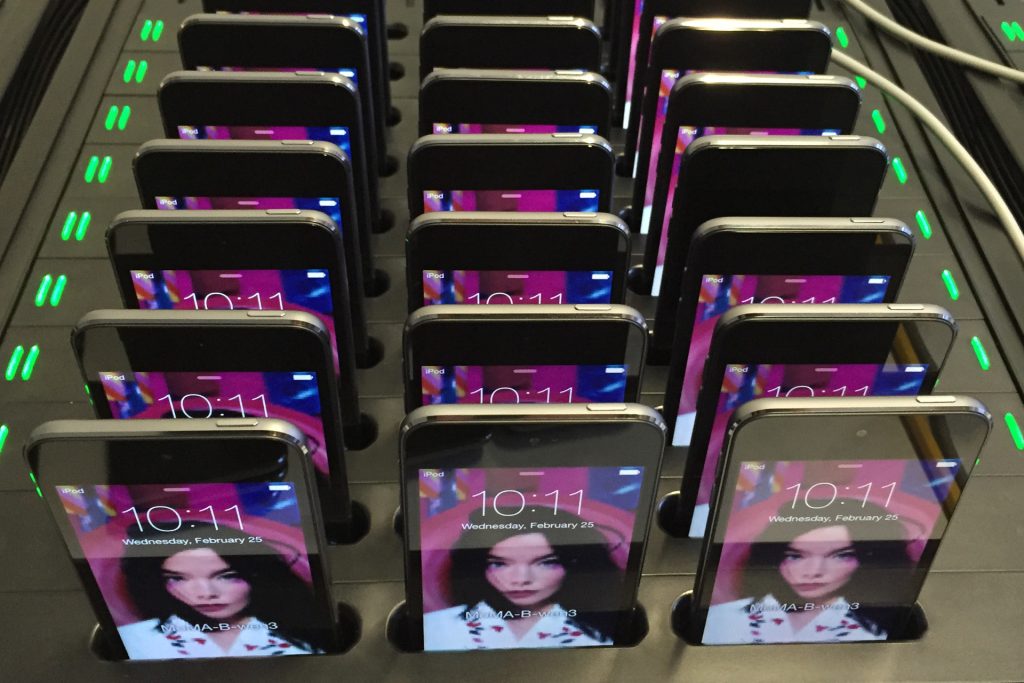
We sourced 200 iPod Touch devices and matching pairs of Bowers & Wilkins headphones for the Songlines section of the exhibit — a curated audio journey through Björk’s life and work. Apple quietly supported us, and their hardware ended up carrying the whole thing — memory, myth and biography.
Building the Dream Team
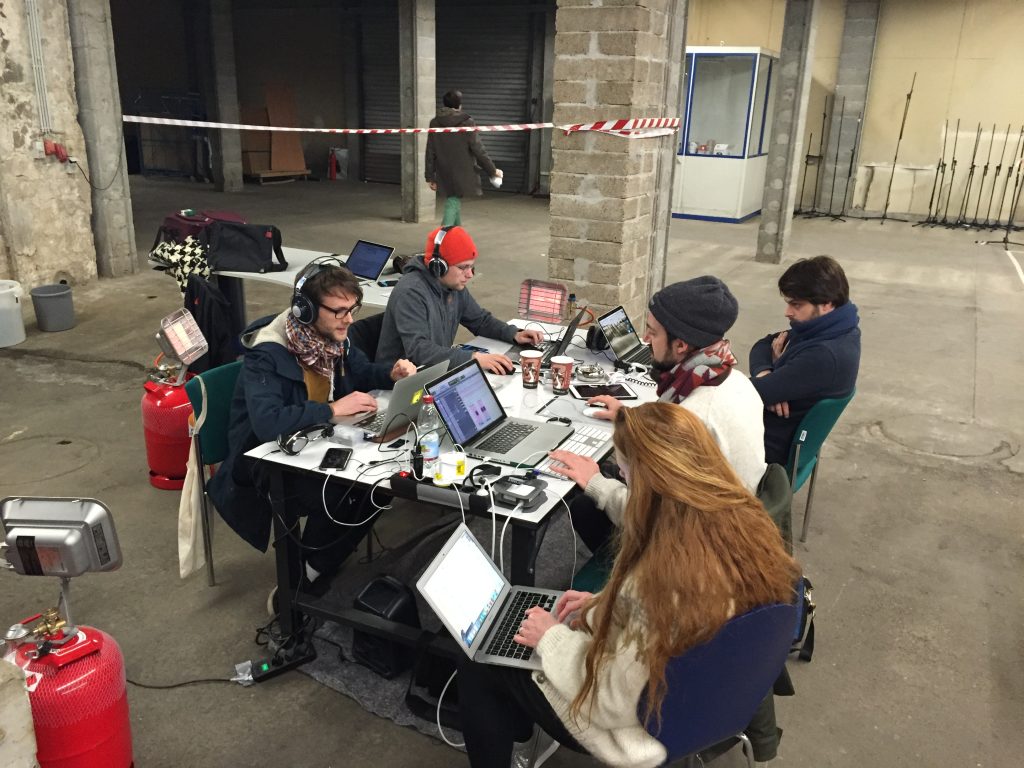
Songlines needed to be more than a glorified audio tour. I pulled together narrators, dramaturgs and interface designers — collaborating with Björk’s longtime lyrical collaborator Sjón and her friend Margret Villhelmsdottir, the BBC R+D unit, breakout audio start-up Two Big Ears, and VWERL’s spatial engineers in Stuttgart. We built an app that synchronised location, narration and music, so visitors weren't so much guided as surrounded.
Meanwhile, in the Black Lake chamber itself, we integrated Barco’s dual 4K projections with IOSONO’s wave field synthesis — a 3D audio system previously only used in advanced research settings. With 49 Bowers & Wilkins speakers encircling the walls, we didn’t just position sound. We sculpted it.
You didn’t watch Black Lake. You stood in it. You felt it move.
Sound Without Spectacle
There was no signage, no touchscreens. The walls were lined with 6,000 bespoke acoustic cones. The emotional core was the music — written in the aftermath of heartbreak — and the land itself. The Icelandic earth, digitally re-rendered and sonically activated, became the true protagonist.
Everything we did had to feel inevitable, not engineered.
A Blueprint, Uncredited
What we proved inside that chamber — that wave field synthesis and precisely mapped projection could turn a room’s architecture into an instrument — didn’t stay in a MoMA gallery. The 49-speaker enclosure and the object-based, sculpted-sound approach we pioneered for Black Lake anticipated the immersive venues that followed. Björk connected this work directly to the team building what became the Sphere in Las Vegas — the lineage is unmistakable.
The same is true of the real-time avatar work I developed at Somerset House: a live, performance-driven digital double, built years before the technique reached the mainstream. That approach anticipated the ABBAtars — the photoreal digital doubles Industrial Light & Magic later realised for ABBA Voyage.
None of this is a complaint. Ideas are famously promiscuous, and the good ones rarely remember who introduced them. I note the lineage only because someone ought to — and because I happen to have kept the drawings.
Looking Back
I rarely talk about Black Lake in detail. Partly because it was such a charged time. Partly because it wasn’t about any one of us. It was about making a new kind of space for art – where technology, emotion, and narrative could be fused without seams. Where the installation wasn’t a container for the content, but part of the content itself.
What I learned — and what I still carry forward — is that the best audio-visual installations don’t overwhelm. They invite. They absorb. And they hold.
Postscript — Stonemilker VR
The postscript to Björk at MoMA played out at MoMA PS1, where we staged Stonemilker VR inside Volkswagen’s geodesic dome. We ran it on ten headsets we built by hand — each one an Apple iPhone 6 Plus dropped into a Firefly VR shell, paired with Bowers & Wilkins P5 headphones — driving a Unity app I developed with Solomon Rogers and his team at Rewind. Visitors stood on a virtual Icelandic shoreline as Björk circled them in 360°.
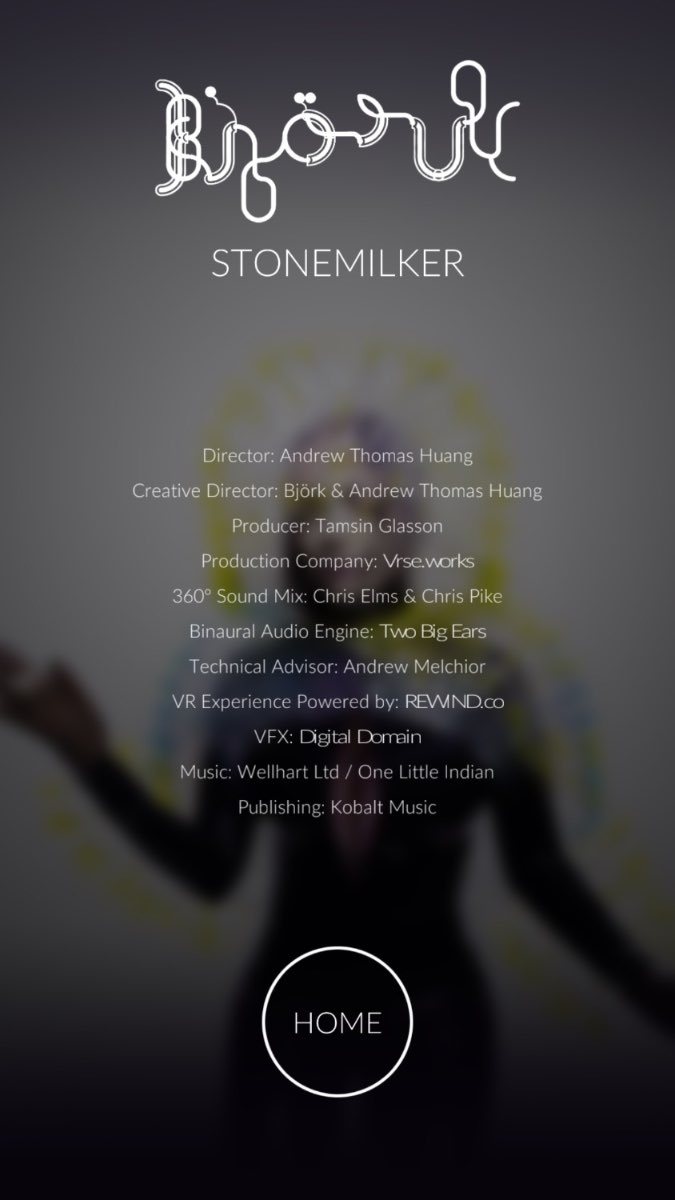
Stonemilker VR went on to become the first VR single ever released on the Apple App Store — since deleted, which is a fittingly modern sort of immortality.