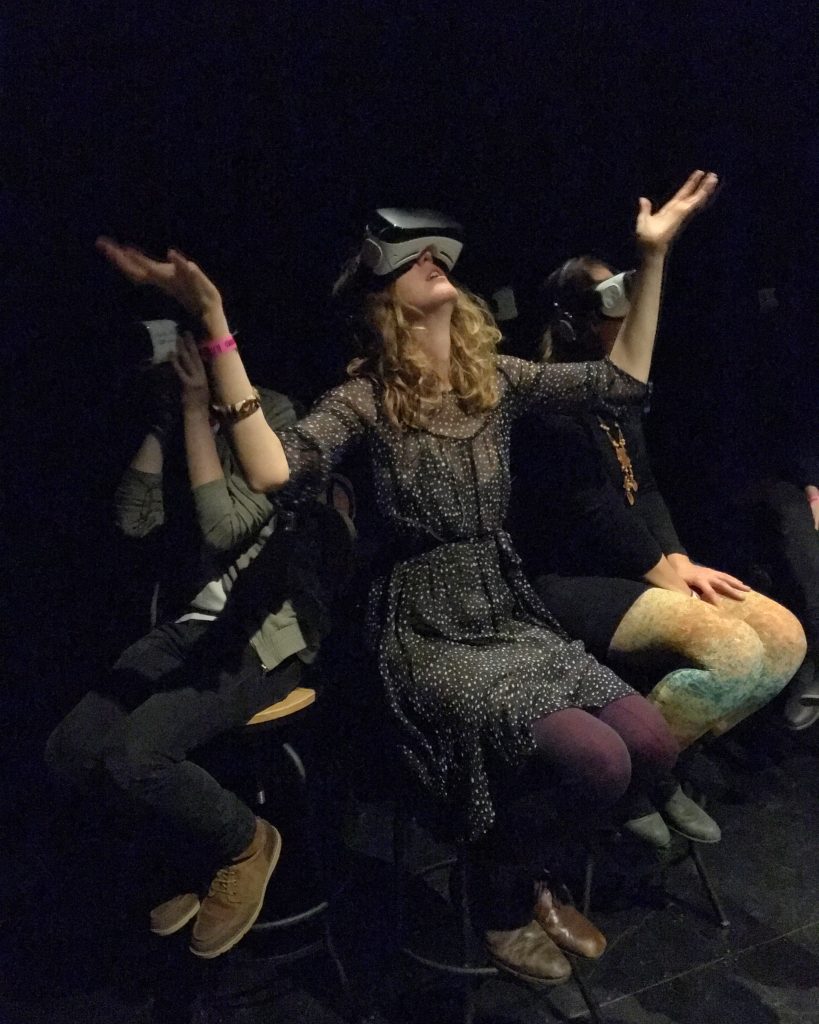
“I feel VR is a natural continuity of the music video. I found it almost more intimate than any other format — in the way that it connects with your body.”— Björk, speaking to Dazed, 2016
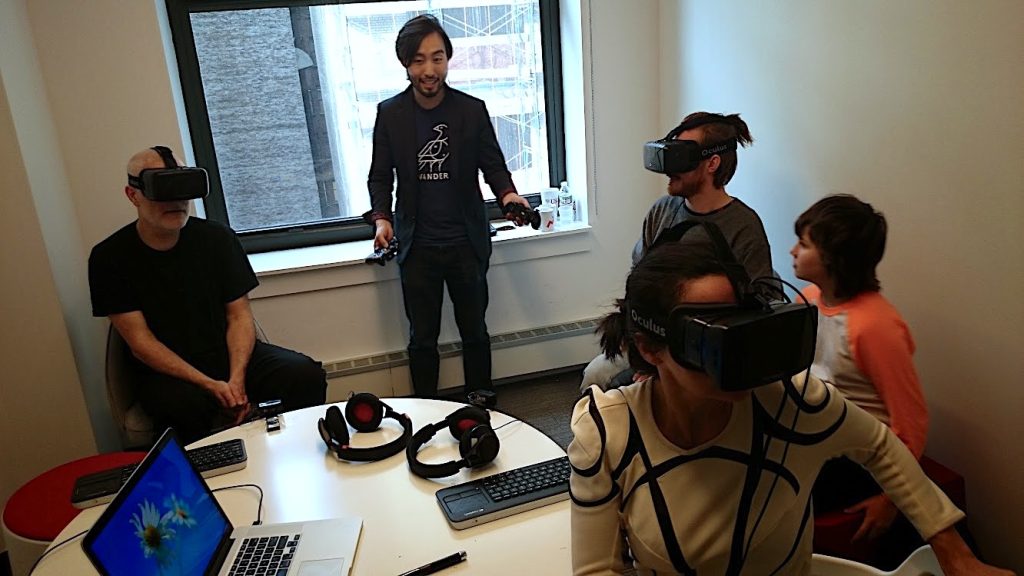
This journey began in 2014, while I was working at the augmented reality start-up Magic Leap. I was immersed in questions of how augmented and virtual reality could transform our sensory and creative lives, specifically those of artists exploring new mediums. It was during this time that I met Björk via my old boss from EMI Ray Cooper. After an initial meeting in Iceland we ended up in the BuzzFeed offices in New York to see a demo of the latest iteration of virtual reality gadgets, from a start-up called Oculus. I introduced her, her daughter, her manager, and her creative partner James Merry to the Oculus DK1, which was the first ‘commercially available’ virtual reality device.
Not long after, I was invited by Björk and her team to help produce some of the elements of her forthcoming MoMA show, which led to the creation of Stonemilker VR, a 360° immersive experience for the final room of the retrospective at the PS1 in Brooklyn. Directed by Andy Thomas Huang and shot on Grotta Beach, the extraordinarily moving footage was stitched by Digital Domain. It’s still one of the most impactful VR experiences I have had and still moves me to tears when I see it.
Enter the BBC
My team and I built a custom app in Unity to deliver the experience and worked with the spatial audio software pioneers Two Big Ears in a great collaboration with Chris Pike from the BBC R&D team in Salford to spatialise the sound using the latest techniques.
Innovate or …
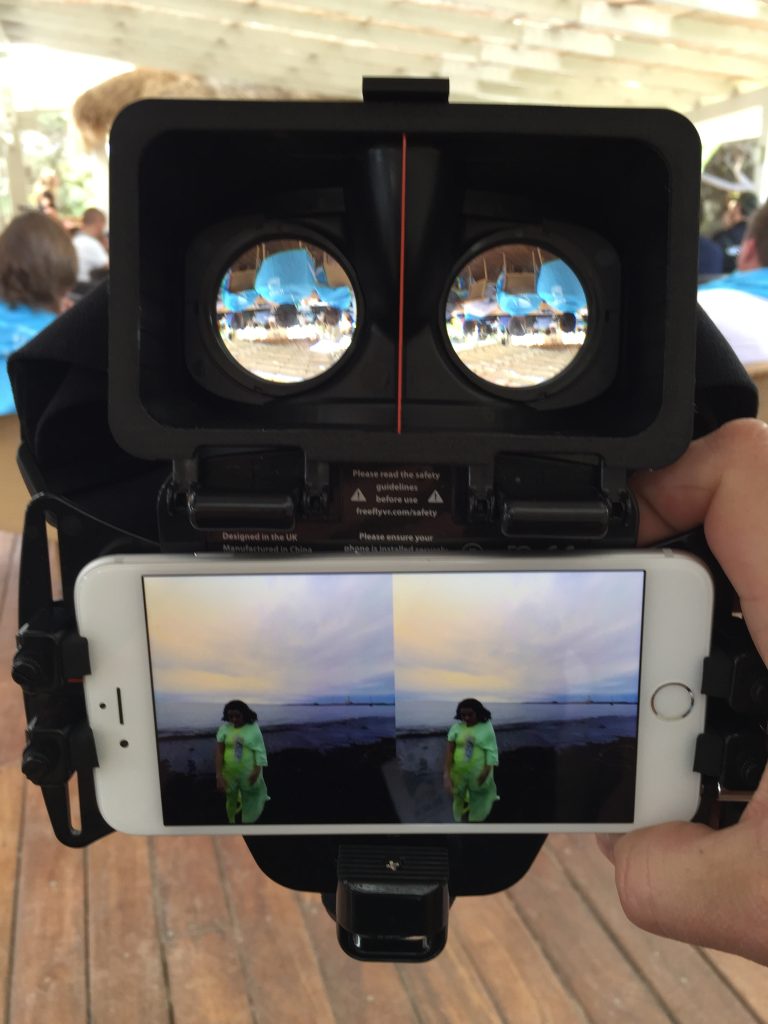
At the time, Oculus headsets were scarce and Magic Leap headsets non-existent, so naturally I built our own: twelve iPhone 6 Plus devices (thank you Apple) mounted into Freefly VR rigs, paired with Bowers & Wilkins P5 headphones (thank you forever Danny at B&W). We built the custom iOS app in Unity and premiered the piece at MoMA PS1 in Brooklyn with a fully designed immersive setting – ocean audio, a projection of the beach, cold air and stools arranged to echo the Icelandic landscape. You can still download the app from the Apple App Store. It’s the first ever VR Single by an artist anywhere.
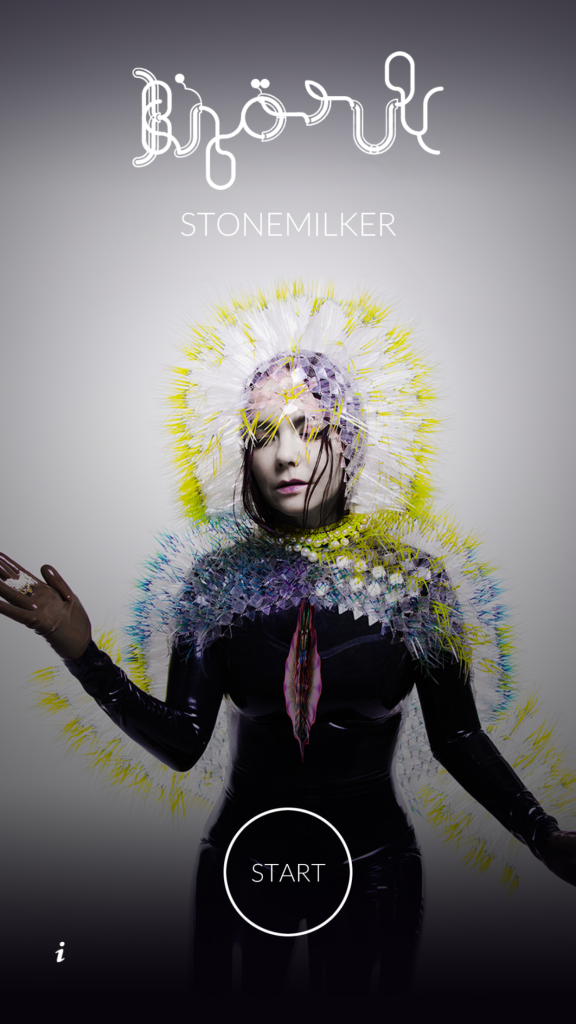
Stonemilker VR became the first ever VR music video by a global artist on YouTube 360. It remains online with over 7 million views — a proof of concept not just for Björk’s vision, but for VR as a serious form of musical storytelling.
In the wake of the sell-out MoMA show, rather than touring the museum exhibits, we created something entirely new that would also give a platform for the MoMA commission ‘Black Lake’ : Björk Digital was born – the world’s first touring virtual reality exhibition by a musical artist. I secured support from HTC, Intel, AMD, and B&W. We assembled 30 HTC Vive headsets, 30 high-spec PCs and GPUs, and 30 sets of studio-grade headphones. This enabled us to build a fully mobile, gallery-grade experience. The headsets were suspended in pairs inside of small blacked out rooms that created a heavy intimacy. And looked just a tad S&M in my opinion.
The Rise and Rise of Björk Digital
The first Björk Digital show premiered at Vivid Sydney in 2016 and grew from there. Björk came over and launched it in person, DJ-ing at the launch party to a room full of delighted Aussies.
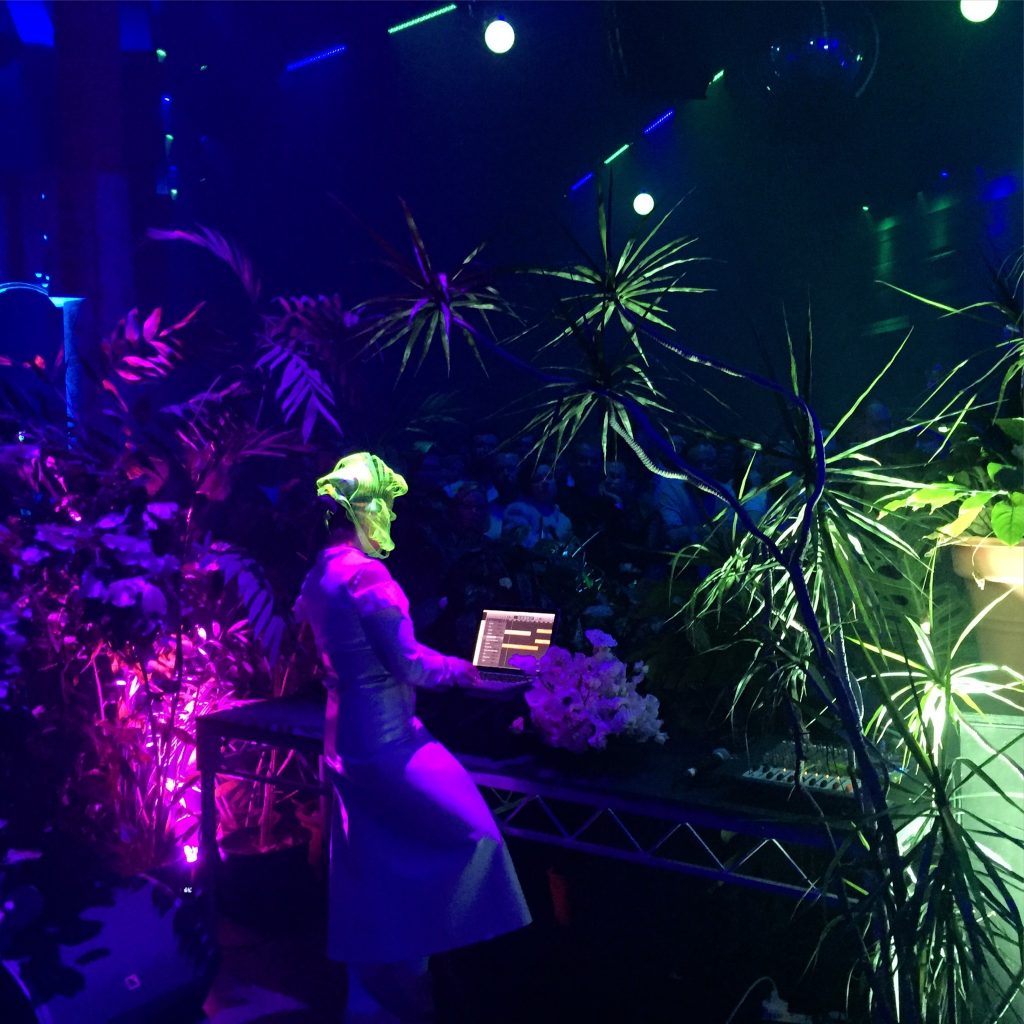
It included the Black Lake room, (featuring a cutting edge Wavefield Synthesis immersive audio system I designed with Björk’s audio engineering wizard Marco Perry), Stonemilker, Not Get (which I produced when the original director stepped away) and Mouth Mantra, and new VR pieces were added at each stop. These included Family, Lion Song, and a virtual adaptation of Black Lake — the MoMA commission I had co-produced for Björk, James Merry, Andy Thomas Huang and curator Klaus Biesenbach. We also included the 2011 Biophilia iPad app, anticipating the fusion of music, play, and technology in educational form as well as cinema room showing all her videos from the past thirty years of her amazing career.
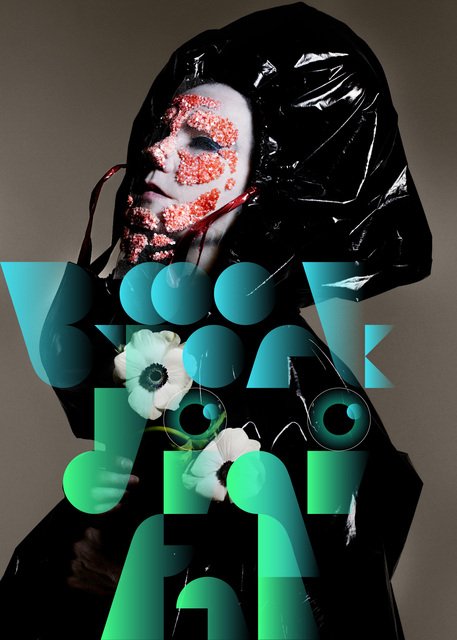
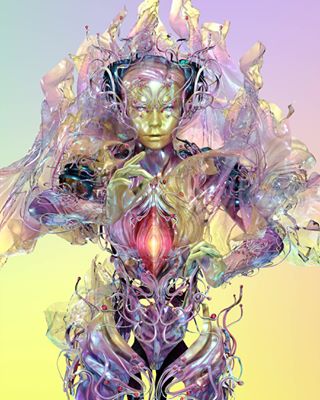
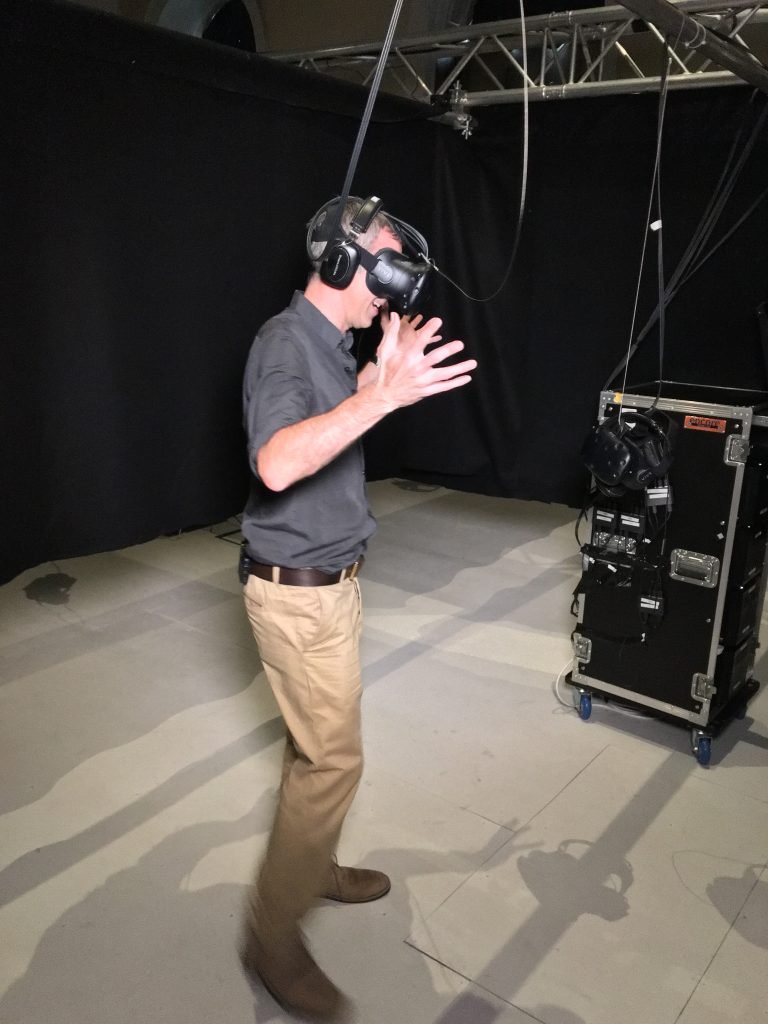
Over the next few years, Björk Digital grew in capacity, with an additional 60 VR headsets added to the system and it toured internationally to Tokyo, London, Montreal, LA, Barcelona, Buenos Aires, and beyond — drawing over 400,000 visitors. It proved that virtual reality music could be not just commercially viable but artistically vital. This was music as ritual, as place, as presence. Not 360° videos of stadium shows but private, emotional experiences created for one listener at a time.
“Immersion is not simply the impression of being surrounded by a pictorial or virtual space; it is a historically shifting concept that expresses the desire to dissolve the distance between art and beholder, subject and world.” — Oliver Grau, Virtual Art: From Illusion to Immersion (2003)
The updated version of Notget VR — fully reimagined with high-resolution spatial sound and particle-based graphics — received a Cannes Lions award. Another first for a virtual reality creation. It was a welcome recognition of the layered, interdisciplinary work that went into this unique body of work.
Telepresence World First
Another highlight personally was when I put Björk into a motion capture suit in Reykjavik and beamed her bones over the internet so she could be at the press launch of the Björk Digital show at Somerset House in London. We had a team at the Icelandic Multimedia Arts School connect with my team in London and the result was Björk puppeteering her avatar from the Andy Huang directed VR piece for Family whilst being interviewed by curator of Somerset House, Jonathan Reekie. A world first.
In 2019, we released Vulnicura VR on Steam: the first immersive album of its kind, structured as a full-length, navigable virtual reality experience. Each track became a spatialised room or landscape of emotional resonance. Now, the project is entering a new phase — remastered for Meta Quest, Apple Vision Pro, and Apple Vision Air — ensuring its continued relevance as immersive platforms evolve.
Although I was not directly involved in the live staging of the amazing Cornucopia tour beyond seeing our shared VR work projected onto the spaces behind her, I am very pleased that many of the ideas, technologies, and emotional principles we developed during the Björk Digital era informed its design. Spatialised voice, integrated sound design, and real-time immersive visuals were all rooted in the research and collaboration we began back in 2014.
These years working with Björk profoundly shaped my own artistic practice. Not just as an experience designer and producer, but as a musician and composer. They sharpened my commitment to sound as architecture, composition as environment, and collaboration as the means by which the impossible becomes real.
I continue to create works at the intersection of spatial audio, immersive design, and emotional narrative. I maintain a detailed archive of the Björk Digital and Vulnicura VR era. This includes documentation, unreleased material, sonic experiments and prototypes. I remain committed to furthering the evolution of music as embodied experience.
For curators, artists, researchers, and technologists exploring the future of music in spatial and immersive contexts, I welcome dialogue and collaboration. What we began wasn’t a passing phase. This was the emergence of a new language — one that’s still being written.
ANDREW MELCHIOR, KRAKÓW, May 2025