In brief
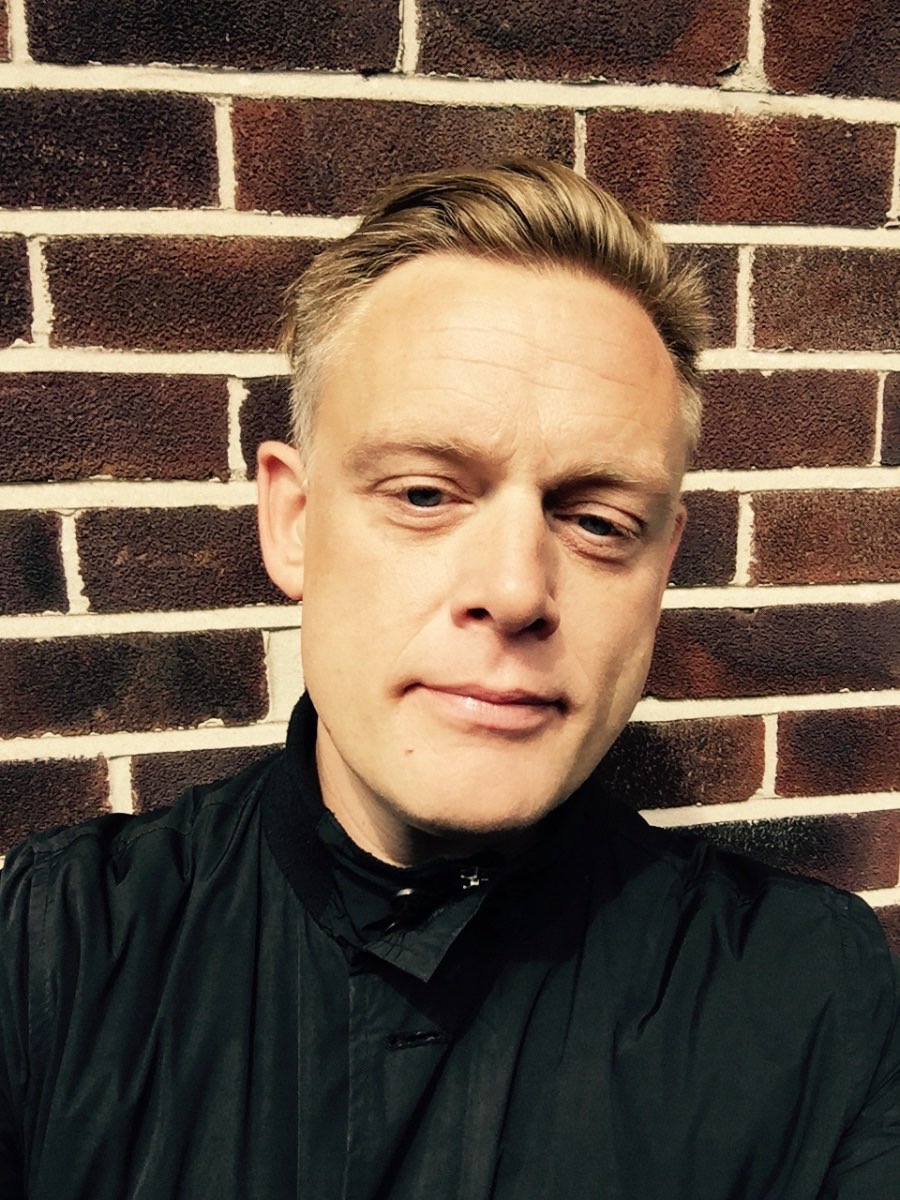
Andrew Melchior is an artist, composer and creative technologist working at the meeting point of music, science and technology. Classically trained, he moved from EMI — where he worked alongside David Bowie and his team promoting BowieNet — into immersive and augmented reality at Magic Leap, and later co-produced Björk's virtual-reality works at MoMA. With Massive Attack he built Fantom and pressed Mezzanine into synthetic DNA. In 2026 his installation The Logos opens at Oulu Cathedral. He is founder of Genotone, Honorary Professor of Computing at the University of Manchester, and author of the forthcoming book Proof of Human.
Press & resources — portrait, short/long biography and selected CV on request via the contact page
The longer story
Classical training & early adventures
It began, as these things often do, with a piano and someone who refused to let me play it badly. Under Alicja Fiderkiewicz I was marched through Bach, Beethoven and Chopin — which is to say I acquired both technical rigour and the useful conviction that emotion, to mean anything, must first be built. A classical training looks hopelessly out of step with the modern world, right up to the moment it turns out to be the only thing holding everything together.
At college I did what the classically trained tend to do the instant no one is watching: I formed bands, produced anyone who would let me (including old friends Elbow), and lurched enthusiastically from punk to electronica. I also fell for the machines — early digital recording, MIDI, the first temperamental music software. Commercially, my life as a musician made little noise. In hindsight that was the best thing that could have happened; failure, applied correctly, is simply redirection. At Manchester University I began drifting from music itself toward this curious new thing called the internet, on the reasonable suspicion that it might matter.
EMI & an education in icons
Digital media carried me to EMI in London, where I was handed the improbable privilege of working near Sir George Martin and David Bowie — an arrangement roughly as intimidating as it sounds. Martin taught me that vision and technical excellence are not rivals but partners; Bowie, that the surest way to stay yourself is to keep becoming someone else. With him I helped promote and develop BowieNet — the first internet service ever launched by a recording artist, with its own member homepages, chat rooms and davidbowie.com email addresses, all humming along at the stately pace of a 1998 modem. In much the same spirit I brokered the industry's first artist–mobile deal, loading Bowie onto a handset years before anyone had a reason to. Through EMI I also fell in with the photographer Mick Rock, who quietly instructed me in image-making, production, promotion, contracts, management, exhibitions, sponsorship and publishing — the unglamorous plumbing that keeps the glamour upright.
A detour through the future
After my mother died — the sort of full stop that rearranges the sentence around it — I stepped away from music altogether and into renewable energy and augmented reality. I joined the UK government's Technology Strategy Board (now Innovate UK) as Lead Technologist for Energy, Generation and Supply, shepherding companies through smart homes, virtual power plants and the electrification of more or less everything. It was, I promise, more thrilling than it sounds.
Magic Leap
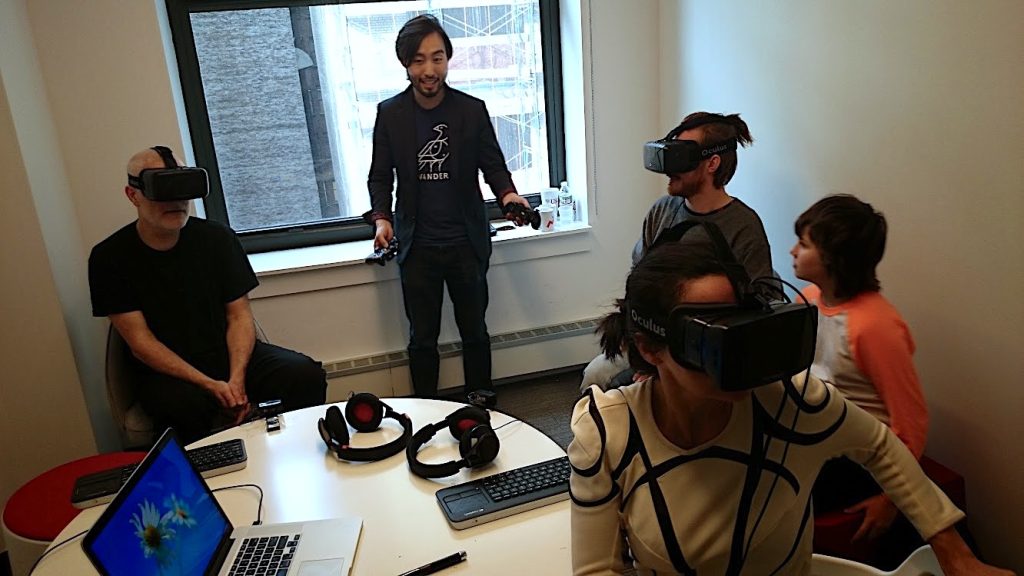
Then, with a family newly begun, I joined Magic Leap — a stealth augmented-reality start-up — under the faintly absurd title of Digital Tribal Chief. My job was to introduce the machine to the artists: Unity, Universal, Autodesk, and a roll-call including Björk, Massive Attack, Garbage, Sigur Rós and The Rolling Stones. I also helped recruit exceptional people, among them Graeme Devine and John Gaeta, which remains one of my better decisions.
Björk
I joined Björk's management and co-produced her 2015 retrospective at MoMA, helping realise Black Lake and Stonemilker — the first virtual-reality works the museum had ever hung. They grew into Björk Digital, a global VR tour, and Vulnicura VR, the first complete album in virtual reality. People still borrow from that work, which I take as the sincerest form of flattery and occasionally the least attributed.
Massive Attack
An introduction to Robert Del Naja led to Fantom, a procedural mixing app that rearranged your music around you in real time — reading your movement, location and the hour of the day — with a dusting of augmented reality. We also pressed Mezzanine into synthetic DNA — an album you could, in principle, spill — built AI art robots, and co-curated AI: More Than Human at the Barbican, where a neural network trained on the band's own stems remixed Mezzanine endlessly for anyone who walked past. It was a happy conspiracy to find out how far music, identity and technology could be pushed before something interesting broke. Somewhere in the middle of all this, Creative Review named me one of its Creative Leaders 50, which I chose to read as encouragement rather than a warning.
Independent work & commissions
Since the pandemic I have worked independently, at the meeting point of music, technology and immersive storytelling. I have built digital-twin worlds for IBM and Unreal Engine, and coaxed generative-AI films out of conversations with the legendary Rolling Stones producer Andrew Loog Oldham. In 2024 Oulu, Finland's European Capital of Culture 2026, commissioned The Logos, a work made by sonifying Fast Radio Bursts, with Professor Kiyoshi Masui (MIT), Professor Timothy Morton (Rice University) and Satu Saarinen, Dean of Oulu Cathedral.
Now
With Kevin Godley — of 10cc, and the man who arguably taught the music video how to dream — I am developing The Gate, a collaboration I am reluctant to over-explain for fear of jinxing it. A project that keeps stubborn company with the ghost of Orson Welles, who understood better than most that the unfinished can be a form of genius rather than an excuse for one.
Rather to my astonishment, the University of Manchester has appointed me Honorary Professor in its Department of Computing — proof that if you loiter near an institution for long enough, it eventually gives you a title instead of directions to the exit. Building on my Manchester lecture, I am writing my first book, Proof of Human, which asks who — and what — we can still trust to be real. You can hear where it started below.
The Manchester Lecture · origin of Proof of Human
— Andrew Melchior