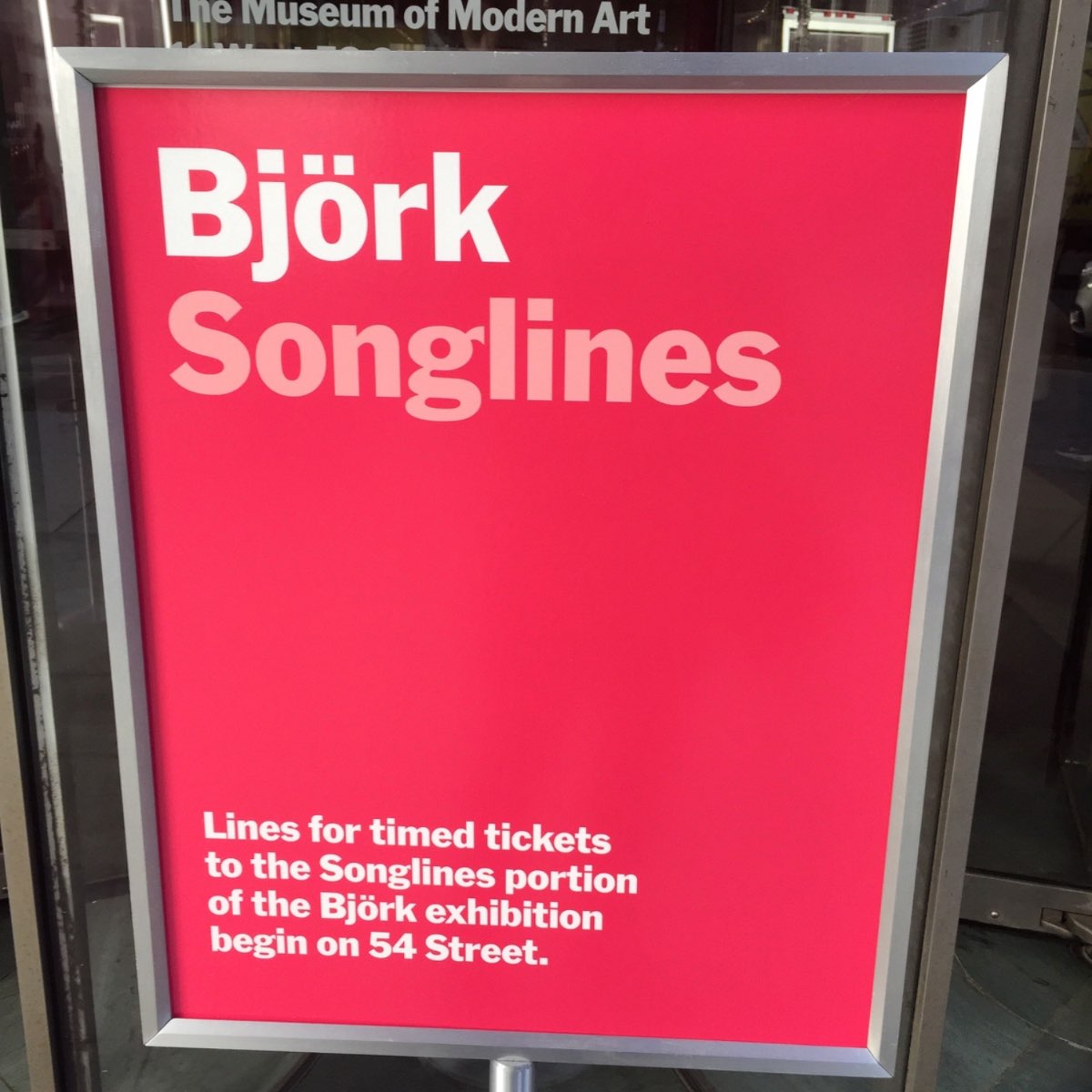
A pivot out of vaporware
Songlines began as an outcrop of my development work with Magic Leap. We were waiting — as one did in those years — for their much-promised hardware to actually arrive. While it didn't, Björk and I pivoted. Rather than wait for a headset that existed mostly in press releases, I built something that could ship into a real museum, for real visitors, in time for her retrospective. I called it AR for the Ears.
The idea was simple to say and hard to do: augmented reality with no glasses and no screens — only sound, placed precisely in space, that knew where you were standing and what you were looking at. You put on a pair of headphones and Björk's world assembled itself around you as you moved through it.
How it worked
I made it with Bowers & Wilkins, using the Rondo head-tracking Bluetooth gadget and 200 fifth-generation iPod touch units (thanks Apple!), and threaded the galleries with a mesh network of Bluetooth beacons. Together they gave the guide a live sense of position and orientation — a procedural, time-of-flight audio system that triggered and spatialised sound according to where each visitor actually was, and where they turned their head.
Instead of the usual numbered handset and a flat recorded track, the guide steered people through Björk's archive of clothes, props, notebooks and ephemera — narrating, scoring and revealing the material as a continuous, responsive piece rather than a menu of clips. The story was written by Sjón, narrated by Margrét Vilhjálmsdóttir with a cameo from Anohni. Two people standing in the same room, looking at different things, heard different things. The exhibition became something you performed by walking through it.
The people behind it
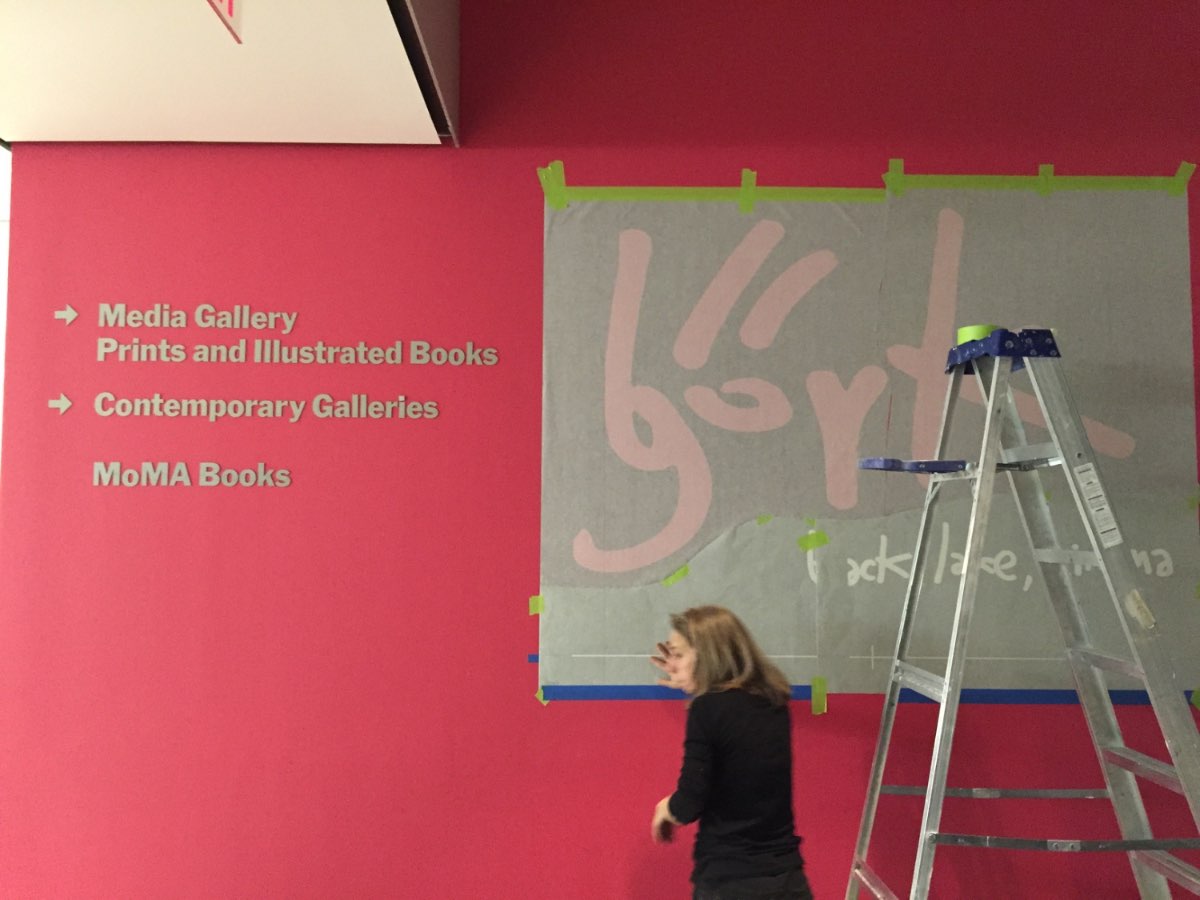
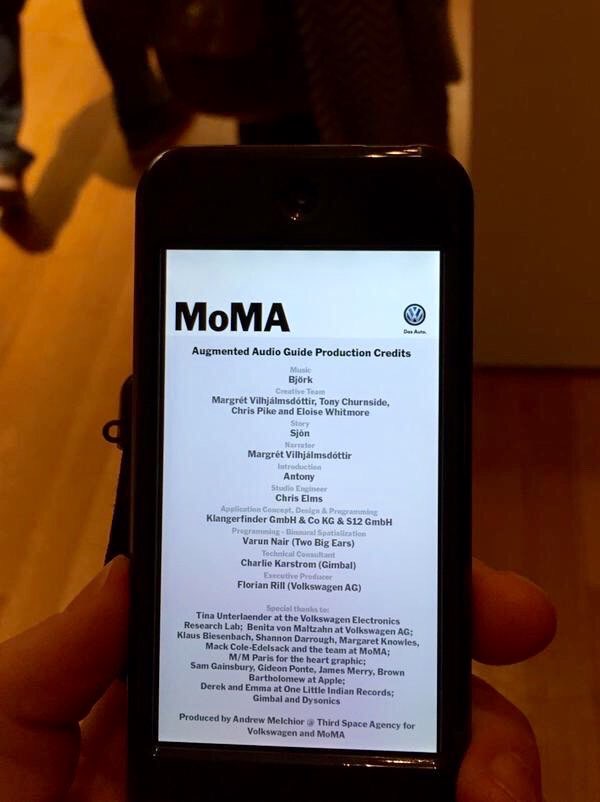
Songlines was produced by me at Third Space Agency for Volkswagen and MoMA, with music by Björk, a story by Sjón, and narration by Margrét Vilhjálmsdóttir (with a cameo from Anohni). The head-tracking and audio hardware came from Bowers & Wilkins; the spatial and beacon engineering was built with a small team of collaborators — the kind of unglamorous plumbing that keeps the magic upright.
In the room
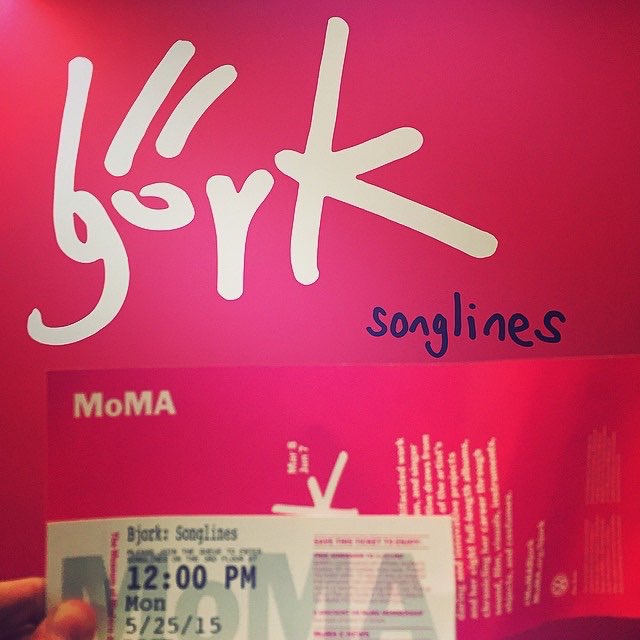
Visitors donned headphones on the museum's third floor and began what Cool Hunting called a "sonic journey" through an intimate labyrinth of Björk's costumes, props and notebooks scrawled in Icelandic and English. Reviewing the retrospective, the magazine caught exactly the effect I'd been chasing: with the headphones on, two people in the same room heard the archive differently, each one alone inside it.
"It's just you crawling through Björk's psyche on your own."
Nara Shin, "Björk: A MoMA Retrospective," Cool Hunting, 4 March 2015.
Why it mattered
Songlines was, in the end, more honest augmented reality than most of the headsets we were all waiting for. It proved that you could place a whole narrative in physical space with nothing on your face — that the ears are a perfectly good display, and that sound, given a sense of where you are, is enough to make a room come alive. Almost everything I have built since — from Black Lake and the VR work to The Logos — grew out of what Songlines taught me about walking inside sound.